Fusel oil — what it is, where it’s used, and what buyers need to know
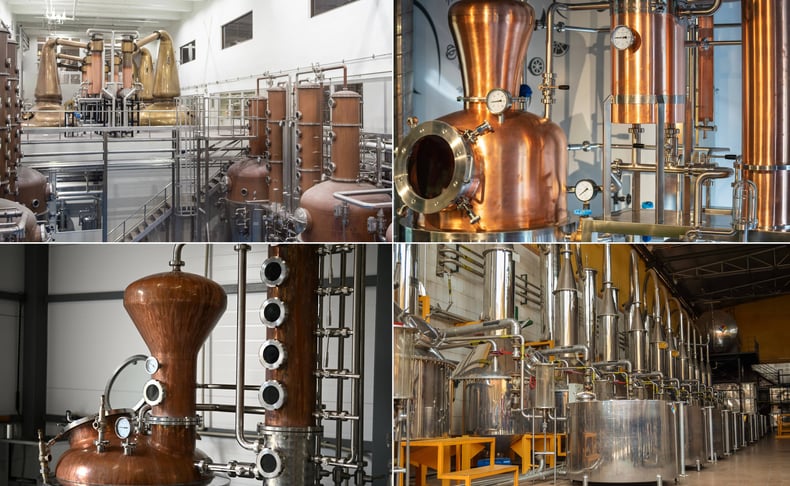
Fusel oil is a natural by-product of fermentation and distillation. It is a mixture of higher alcohols — principally isoamyl alcohol, alongside isobutanol and propanol — recovered as a side-cut during ethanol rectification.
It has two distinct markets: food and flavour on one side, industrial and biochemical on the other. The same product, qualified differently for each.
What does fusel oil contain?
- Isoamyl alcohol — the primary component, typically 50–70% of the mixture
- Isobutanol — a significant secondary component with its own industrial applications
- Propanol — present alongside other C3–C5 higher alcohols
- Trace esters and other minor alcohols — composition varies by raw material origin and fermentation conditions
Who buys fusel oil and for what?
Food and flavour applications
Fusel oil and its components are used across food and beverage manufacturing:
- Flavour houses — isoamyl alcohol is used as a flavour ingredient and as the base for ester production, including isoamyl acetate
- Spirits producers — used to build flavour and congener character in spirits and beverages
- Fragrance applications — isoamyl alcohol and its esters appear in fragrance formulation
Non-food and industrial applications
The industrial buyer base for fusel oil is broad:
- Solvents and coatings — higher alcohols from fusel oil are used in lacquers, coatings, printing inks, adhesives, and polishes
- Biofuel and fuel additives — selected fusel oil fractions can be used in fuel blending and as bio-based fuel components
- Biochemical applications — isobutanol recovered from fermentation-derived fusel oil can provide a bio-based input for solvents, intermediates and downstream chemical production
- Mining and mineral processing —Isoamyl alcohol is used in the manufacture of isoamyl xanthate, a flotation reagent widely used to separate and recover valuable ores in mineral processing and mining operations.
- Chemical synthesis — used as an intermediate in ester and plasticiser production, and in acid purification and metal solvent extraction
- Pharmaceutical intermediates — isoamyl alcohol is a starting material for certain pharmaceutical preparations
Food grade vs non-food — what’s the difference?
The molecule is the same. What differs is the specification, testing, and certification that accompany the product.
- Food grade — supplied with food safety testing and documentation for flavour and spirits applications
- Non-food / industrial grade — supplied with technical and compliance documentation for solvent, fuel, mining, and chemical applications
Buyers should confirm which grade their application requires before sourcing.
What raw materials is fusel oil sourced from?
Fusel oil is produced from fermentation-based ethanol production. Common raw material origins include sugarcane and sugar beet. The raw material origin affects the composition profile — which is why a certificate of analysis per batch is standard practice for serious buyers.
What to check when sourcing fusel oil in bulk
Grade and application fit
Confirm whether you need food grade or industrial grade before requesting a quote. The documentation and certification requirements differ significantly between the two.
Certificate of analysis
Fusel oil composition varies by origin and batch. A CoA per shipment confirming isoamyl alcohol content, isobutanol level, water content, and impurity profile is non-negotiable for any serious application.
REACH compliance
For EU-based industrial buyers, confirm REACH compliance documentation from your supplier. This is a standard procurement requirement for chemical inputs in Europe.
Supply reliability and traceability
Fusel oil is a by-product — supply is tied to ethanol production volumes. A supplier with consistent, traceable supply from a stable source network reduces the risk of disruption to your production.
Separated alcohols vs whole fusel oil
Some buyers require whole fusel oil. Others need the separated alcohols — pure isoamyl alcohol or pure isobutanol — for their specific application. Confirm which form your process requires.
Interested in fusel oil, isoamyl alcohol, or isobutanol?
Get in touch with our team to discuss your application, required grade, and current availability.