Bergen op Zoom, June 2026
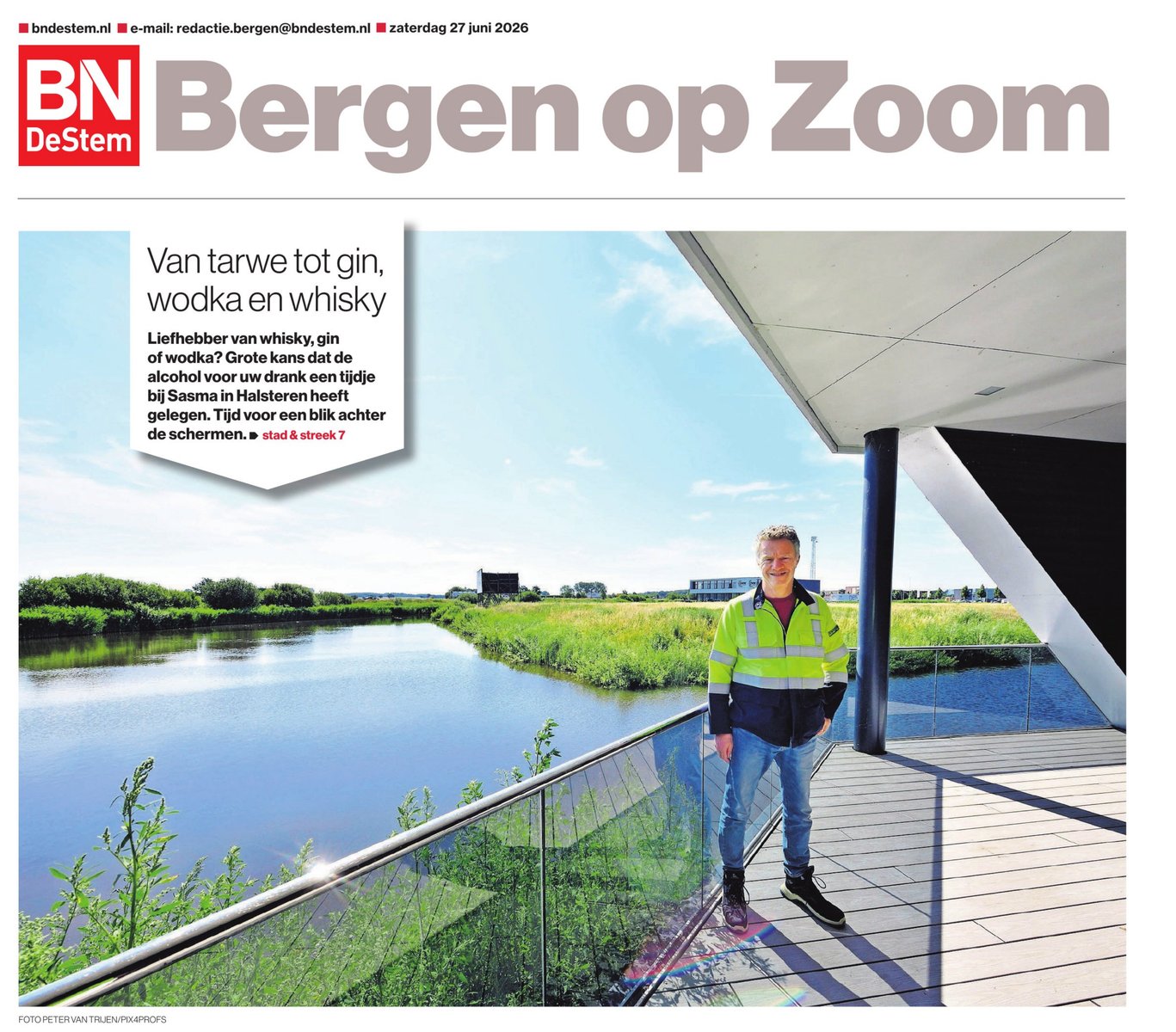
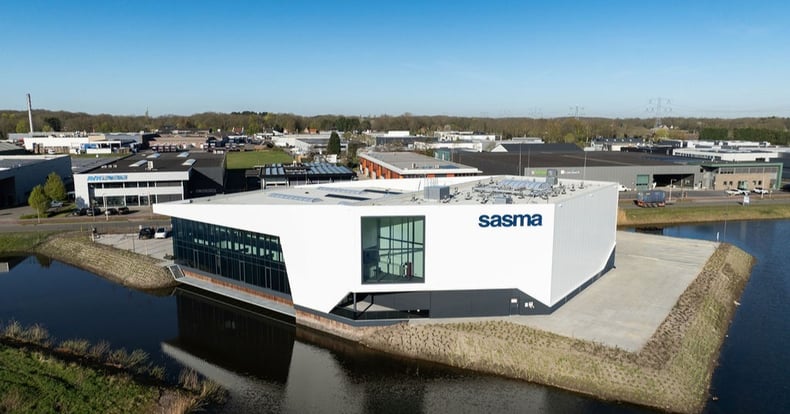
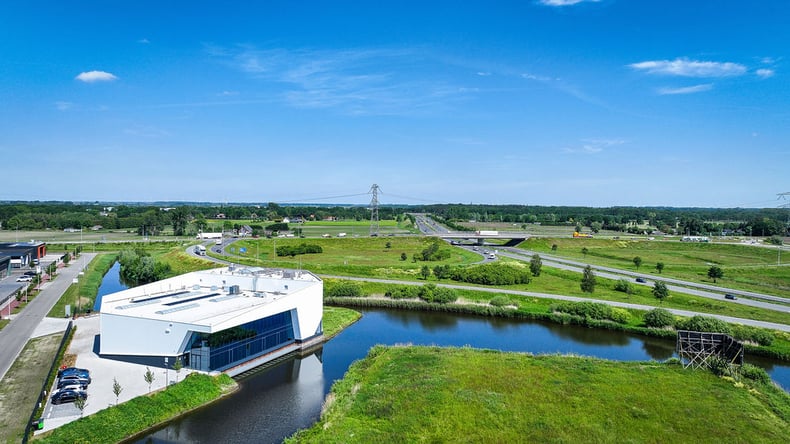
When BN DeStem, the regional newspaper covering Bergen op Zoom, wanted to understand what happens inside the striking new building on the Oude Molen industrial estate, they didn’t ask us for a press release — they sent a journalist to walk the floor.
The resulting piece, titled "Sasma heeft klanten over de hele wereld" ("Sasma has customers all over the world"), offers an outside look at a facility we’ve spent years planning.
A Global Operation, Run From a Small Team
The article traces how a bottle of whisky, gin, or vodka on a shop shelf may have passed through Halsteren on its journey — arriving as bulk alcohol, and leaving ready for the next stage of production. Sasma’s headquarters remains in Zoetermeer, but Halsteren now handles the physical work of storing, blending, diluting, and dispatching alcohol, run day-to-day by a team of four under location manager Mark van Herwijnen.
The site was chosen deliberately: on the Oude Molen industrial estate, just off the A4, close to the ports of Rotterdam and Antwerp.
Inside the Tanks
The facility’s larger storage tanks hold up to 100,000 litres each; smaller tanks hold 35,000 litres. Between them, they store a range of products — gin, whisky, ethanol — most of it distilled from agricultural raw materials like wheat. As van Herwijnen explained to the paper, Sasma also sources alcohol from potatoes and sugar beets, diluting it to the required strength on-site.
A dedicated set of tanks is kosher-certified, inspected by a rabbi for use in the Jewish market. The tanks haven’t been repurposed from other use — they were built for this from the start.
Safety First
Because alcohol is highly flammable, the site operates under strict safety protocols: visitors and staff wear safety shoes and hi-vis vests, and phones and smartwatches are barred from the production floor. Fire-retardant walls and a CO2 suppression system are built into the facility.
How the Alcohol Moves
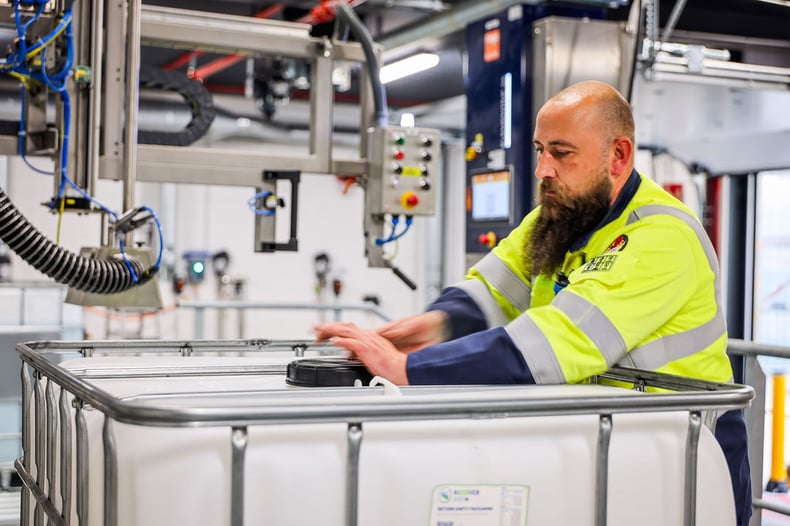
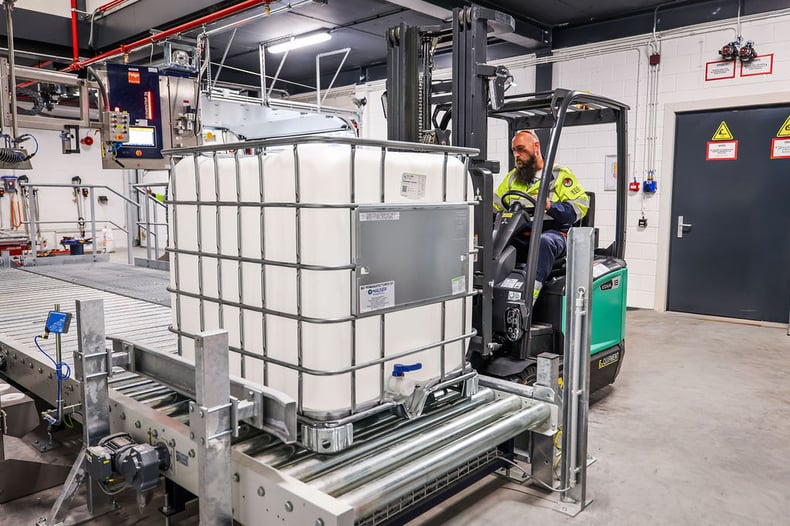
Once processed, alcohol leaves Halsteren three ways: by tank wagon, tank container, or in 1,000-litre IBCs. Loading platforms are connected directly to the storage tanks by pipeline, and a weighbridge confirms exact volumes — filling a single IBC takes about three minutes. The first two tank wagons have already been filled and dispatched.
Testing On-Site
Halsteren also houses a small in-house laboratory, where alcohol quality and percentage are tested before dispatch. While most of what moves through the facility is destined for beverages, the article notes it’s increasingly used in pharmaceutical and cosmetic applications too.
Customers in More than 70 countries
Founded in 2002, Sasma is a family business — general director Hans van der Kloot lives primarily in the US but is a regular presence at Halsteren. As van Herwijnen told the paper: "This location is truly his baby. He’s proud that we’re expanding in this region."